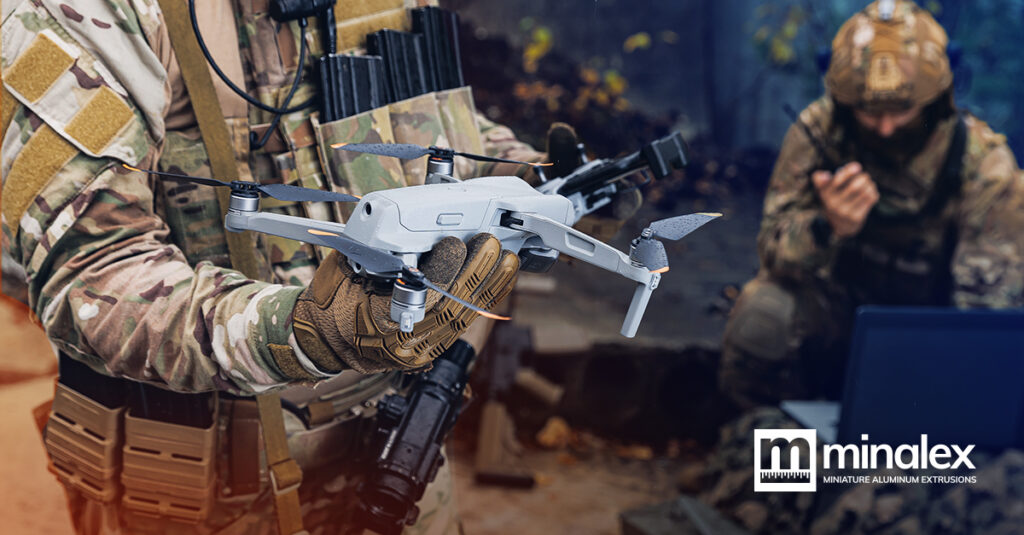
Military drones, or Unmanned Aerial Vehicles (UAVs), have become an essential part of modern warfare, offering versatility in missions such as surveillance, reconnaissance, and other extremely specific purposes. Their history dates back many decades, but their use has surged in recent years due to advancements in technology and the increasing demand for remote warfare capabilities.
The concept of military drones can be traced back to World War I. One of the earliest examples was the Kettering Bug, developed by Charles Kettering in 1918. The Kettering Bug was an unmanned, propeller-driven aircraft designed to function as a “flying bomb” or cruise missile. However, it wasn’t until the 1990s that military drones saw significant operational use.
Today’s military drones serve a wide variety of critical roles such as gathering real-time intelligence on enemy positions, monitoring borders, and tracking movements in hostile territories. They also serve to identify and designate targets for precision-guided weapons as well as locate missing personnel or survey disaster-stricken areas for humanitarian missions.
The size of military drones can vary widely in size, from small hand-launched devices to large aircraft-like drones. There are micro/nano drones which are less than one foot in length and are designed for covert operations all the way up to the largest drones, which can reach 70 to130 feet in wingspan. The latter are typically deployed as long-endurance drones for surveillance and combat.
The duration of drone missions can vary greatly but reliability and range are critical to their success and aluminum extrusions play a key role. One of the key advantages of aluminum extrusions is the ability to create custom shapes and profiles suited to the specific design requirements of military drones. This flexibility allows the production of modular components that can be easily integrated into different drone designs, facilitating repairs, upgrades, or modifications as technology evolves. An example of this is custom aluminum extrusions, which can be used to create modular frames or attach points that allow easy swapping or upgrading of cameras, sensors, or other mission-critical components.
Here are some direct benefits of using aluminum extrusions in military drones:
- LIGHTWEIGHT: Aluminum’s low density contributes to reduced overall drone weight, increasing flight range and efficiency.
- STRENGTH AND DURABILITY: Despite being lightweight, aluminum extrusions offer high strength-to-weight ratios, making drones more durable in challenging environments.
- CORROSION RESISTANT: Aluminum’s natural resistance to corrosion ensures that drones can operate in various environmental conditions without significant degradation.
- THERMAL CONDUCTIVITY: Aluminum’s high thermal conductivity helps in managing heat generated by onboard electronics and motors.
- CUSTOMIZATION: The ability to extrude aluminum into complex shapes allows for highly customized components tailored to specific drone designs and functions.
Minalex is proud to partner with our customers and support the U.S. military by providing the highest quality miniature aluminum extrusion.
For parts that are built for mission critical success, contact us contact us here.