In today’s fast-paced manufacturing world, the ability to quickly and accurately develop prototypes is crucial. Whether you are a multinational corporation or a small startup, an oversight in specifications can lead to costly errors, potentially amounting to countless dollars in losses. In the worst cases, these mistakes can even result in financial disaster.
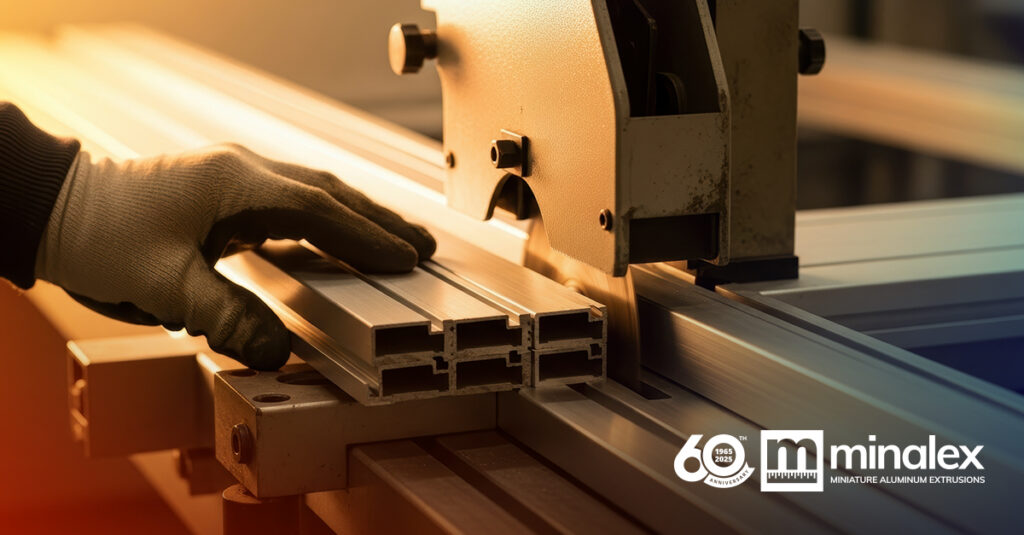
Aluminum prototyping provides an efficient and cost-effective solution, particularly when using miniature aluminum extrusions. Unlike 3D printing, which can be time-consuming and expensive, extruding aluminum prototypes is relatively quick and scalable. Consider the inefficiency of relying on 3D printing: to manufacture 50 prototypes simultaneously, you would need 50 individual 3D printers. Alternatively, using a single 3D printer to produce these prototypes sequentially could take weeks or even months—an impractical scenario.
The Importance of Precision in Prototyping
The key to successful prototyping lies in detailed and accurate technical drawings. Precise specifications help manufacturers identify potential issues before full-scale production begins, saving both time and money. By testing a prototype before commercial manufacturing, companies can assess the process, identify potential improvements, and make necessary refinements—ultimately streamlining operations and reducing costs.
Why Aluminum is the Ideal Prototyping Material
The selection of the right material plays a critical role in the success of a prototype. If the wrong material is chosen, both the prototype and the final production component may fail. Compared to other materials, aluminum offers unique advantages across many industries, including medical, aerospace, electric vehicles, and military applications. Read our popular Aluminum Prototyping Guide for more insights!
FIVE KEY BENEFITS OF ALUMINUM IN PROTOTYPING:
- Material Wear Resistance: Aluminum provides superior wear resistance compared to plastic, which may lack hardness, and titanium, which can be prohibitively expensive.
- Corrosion Resistance: Unlike iron and other metals prone to corrosion, aluminum naturally resists rust and can be enhanced with specialized coatings for added protection.
- Mechanical Strength: The ability of aluminum to withstand specific loads makes it a reliable choice for real-world performance and production feasibility.
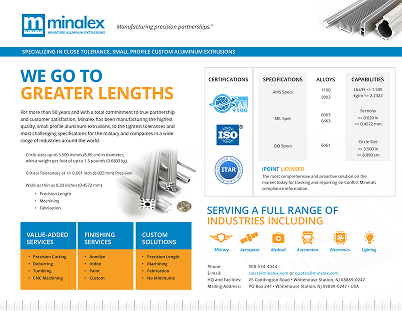
- Manufacturing Precision: Miniature aluminum extrusions can be manufactured with extremely tight tolerances (+/- .001”), ensuring consistency and accuracy that 3D printing and plastics cannot match.
- Cost and Time Efficiency: The cost of creating a die for extruding an aluminum prototype is relatively low, starting at around $500 for simple profiles, making it a cost-effective choice for rapid prototyping.
Partner with Minalex for Prototyping
By working with a single-source provider like Minalex, you can benefit from expert guidance in refining specifications, selecting the right aluminum alloy, and optimizing the manufacturing process. This collaborative approach ensures the highest level of precision and efficiency, reducing costs and accelerating product development.
Ready to discuss how aluminum extrusions can support your next aluminum prototyping project? Call us today at (908) 534-4044, or click here to learn more.